
Ponds and Koi
How Deep Should a Koi Pond Be in the Central Valley?
Pond depth usually comes up as a winter question: is it deep enough that the fish make it through a freeze? Extension guides make the point that depth matters just as much in hot weather. In a Central Valley yard, summer is the season to design for.
The Number: 3 to 4 Feet
Two university extension guides land on the same depth. Clemson's says that in warmer climates, plants and fish should have areas at least 3 to 4 feet deep as a cool refuge during the heat, and that the same areas give them a refuge in cold weather. Alabama's says most permanent outdoor pools should have a portion at least 3 or 4 feet deep, and adds that koi in particular tend to lose color and become stressed if they have no cool place to retreat in hot weather.
Note the word "portion." The whole pond does not need to be that deep. A deep zone with shallower shelves around it does the job.
Why Shallow Ponds Struggle in Summer
- Warm water holds less oxygen. Penn State Extension notes that pond water at 40°F can hold over 12 mg/L of dissolved oxygen, but only around 8 mg/L at 80°F.
- Warm fish need more of it. As water warms in summer, fish speed up their metabolism while less oxygen stays dissolved, especially at night when underwater plants are using oxygen too. Alabama's guide says fish become severely stressed below 3 ppm and die near 1 ppm.
- Summer is fish-kill season. Penn State says fish kills happen most often in summer, in ponds that are relatively shallow and warm.
Depth Works Best With Shade and Moving Water
- Block the midday sun. Both guides suggest siting a pond so it avoids direct sun in the hottest part of the day, since fish can be stressed by high temperatures unless they have shade. Aquatic plants give that shade, and they take up nutrients that would otherwise feed algae.
- Set it in the ground. Alabama notes that pools at least two-thirds below ground level stay cooler in hot weather and hold heat in cold weather.
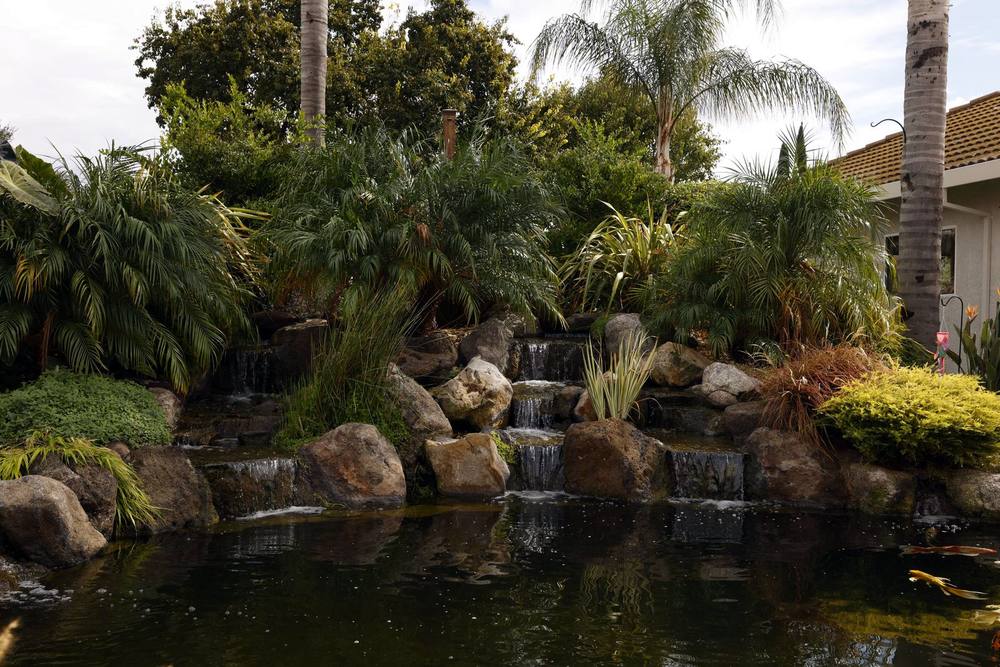
- Keep the deep water moving. Penn State explains that deep, still ponds can form a warm top layer and a cold bottom layer, where oxygen can slowly drop toward zero. Alabama credits waterfalls and fountains with keeping oxygen up, and Penn State adds that an air diffuser near the bottom circulates oxygen through the full depth.
- Run the pump all the time. Aquascape recommends running a pond pump 24 hours a day and notes that oxygen is at its lowest at night.
- Keep it out from under trees. Clemson notes that leaves falling into the water add maintenance and hurt water quality.
Shape the Pond in Steps
Alabama Extension suggests cutting the sides in two or three tiers, each about 12 inches wide. The tiers hold the liner in place, give plants a ledge, and help debris settle toward the deepest point, where it can be removed. New Mexico State's extension guide adds a bonus to depth: ponds at least 3 feet deep grow less of the algae that starts on the bottom. Depth and steep sides also help keep mosquitoes out, as we cover in Do Water Features Attract Mosquitoes?
Plan Room for Grown Fish
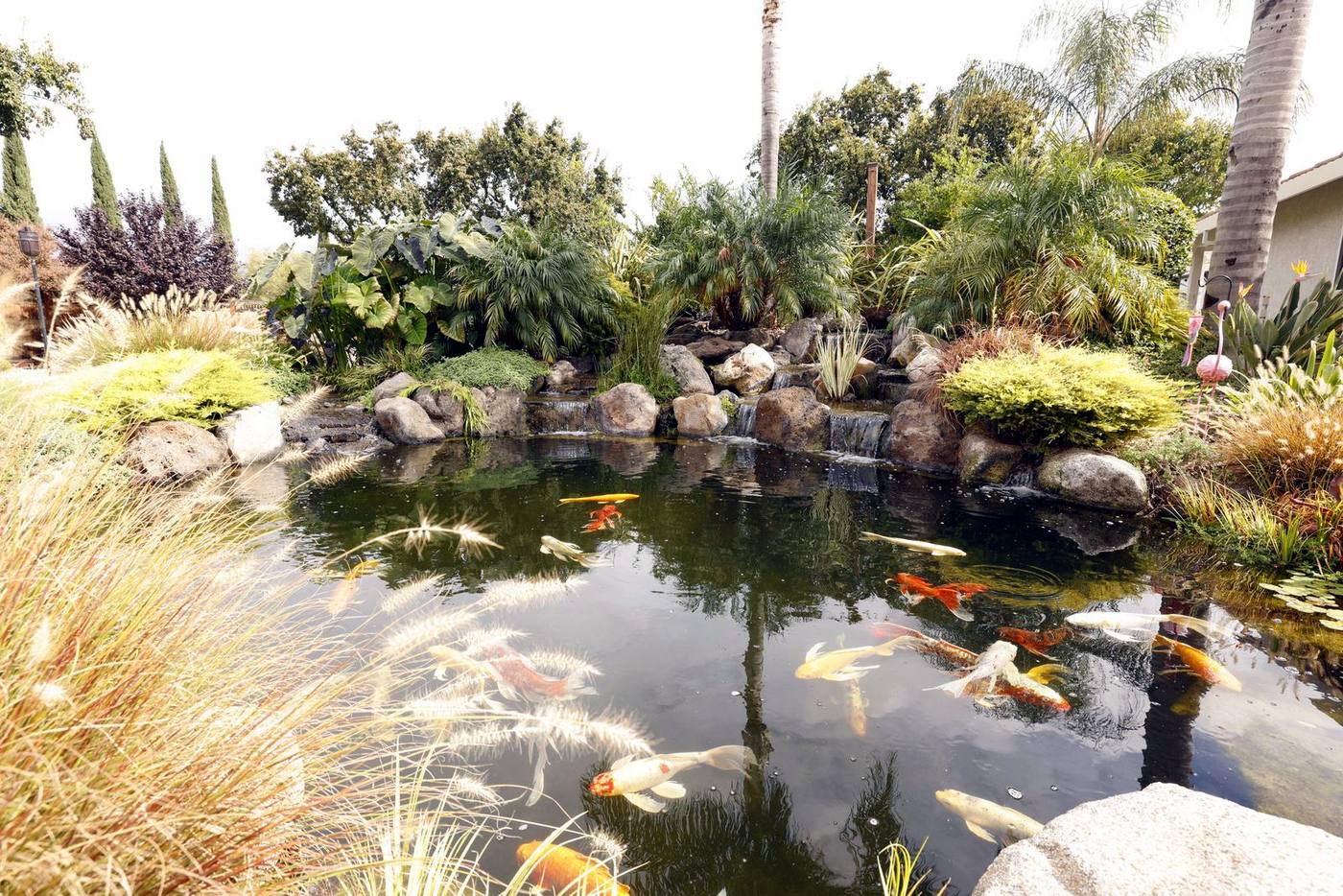
Koi get big, and they last. Alabama's guide puts the average adult at 18 inches and notes koi sometimes live 60 or 70 years. Aquascape's rule of thumb is at least 10 gallons of water for each inch of fish, so a 6-inch fish needs 60 gallons to itself. A deep zone adds volume, and volume gives fish room to grow without crowding the water.
Depth and Safety
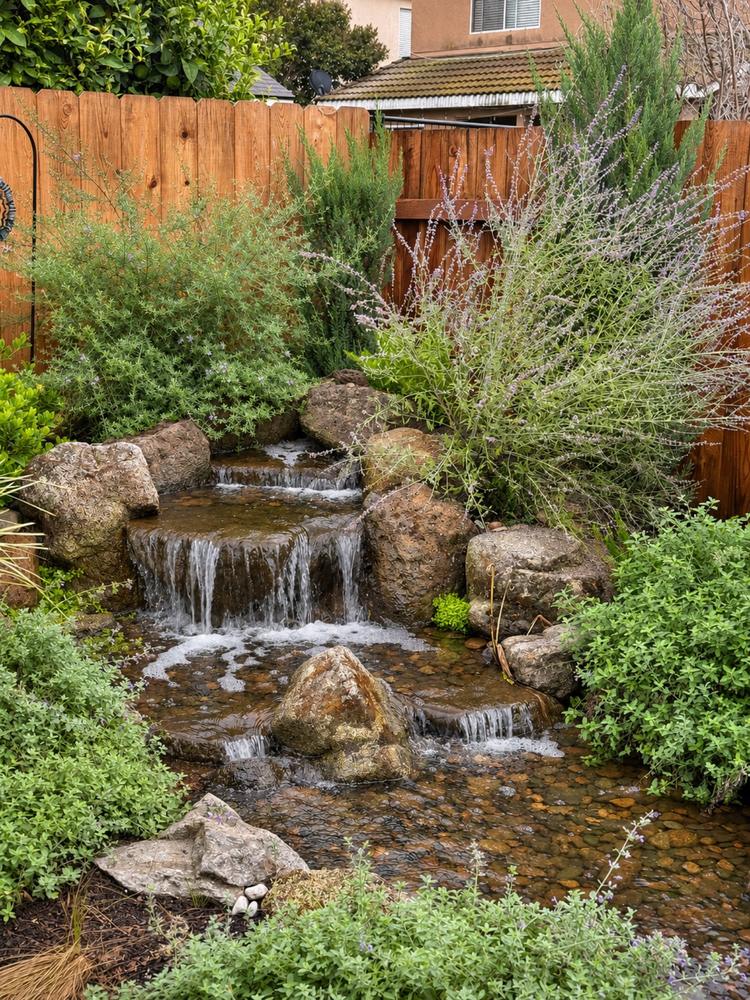
Deep ponds can need a permit and a safety barrier, so we check the city's requirements for your project before we build. If small children use the yard, a pondless waterfall gives you the sound of water with no open pool. Read Pond or Pondless Waterfall: Which Is Right for Your Yard? to compare the two.
How We Build Koi Ponds
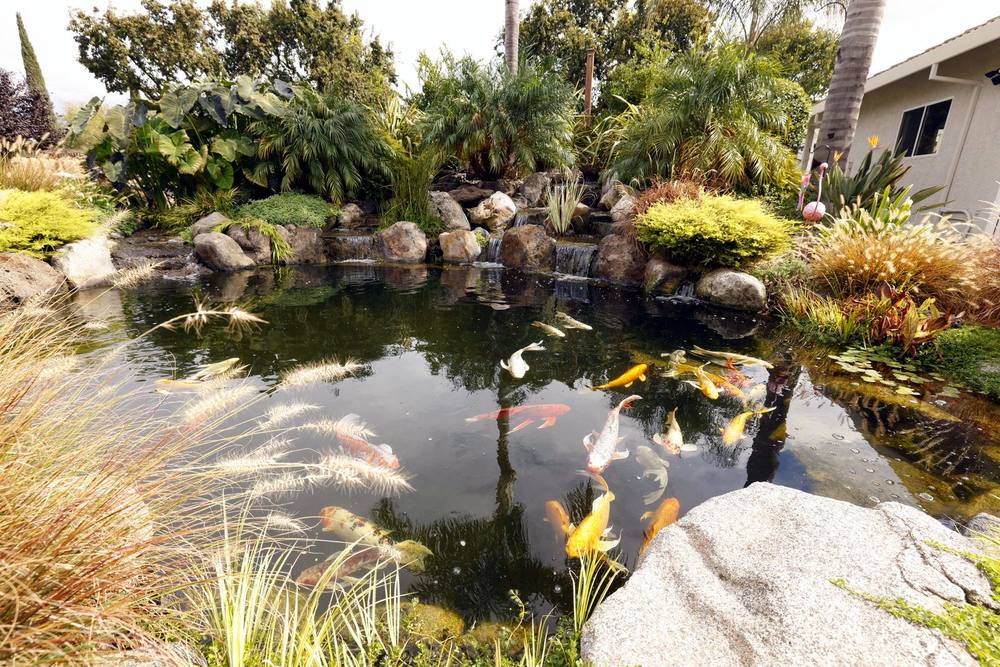
Every Green Lion pond recirculates, with filtration sized for the fish, shelves for plants, falls to keep the water moving and an auto-fill line to cover summer evaporation. If you want to see the pond in your own yard before anything is dug, we can show it to you in 3D, free with the purchase of a 2D design. See the ponds and streams we build in Turlock.
Sources
- Clemson Cooperative Extension: Aquatic Garden Pond and Pool Construction (HGIC 1707)
- Alabama Cooperative Extension System: Ornamental Garden Pools (ANR-789)
- Penn State Extension: Dissolved Oxygen Basics for Pond Owners
- New Mexico State University Extension: Managing Filamentous Algae in Ponds (W-103)
- Aquascape: Your New Ecosystem Pond Owner's Manual (PDF)
Checked November 24, 2026. Rules, programs and prices change; confirm with the agency or maker before you start.