
Water Features
Pond or Pondless Waterfall: Which Is Right for Your Yard?
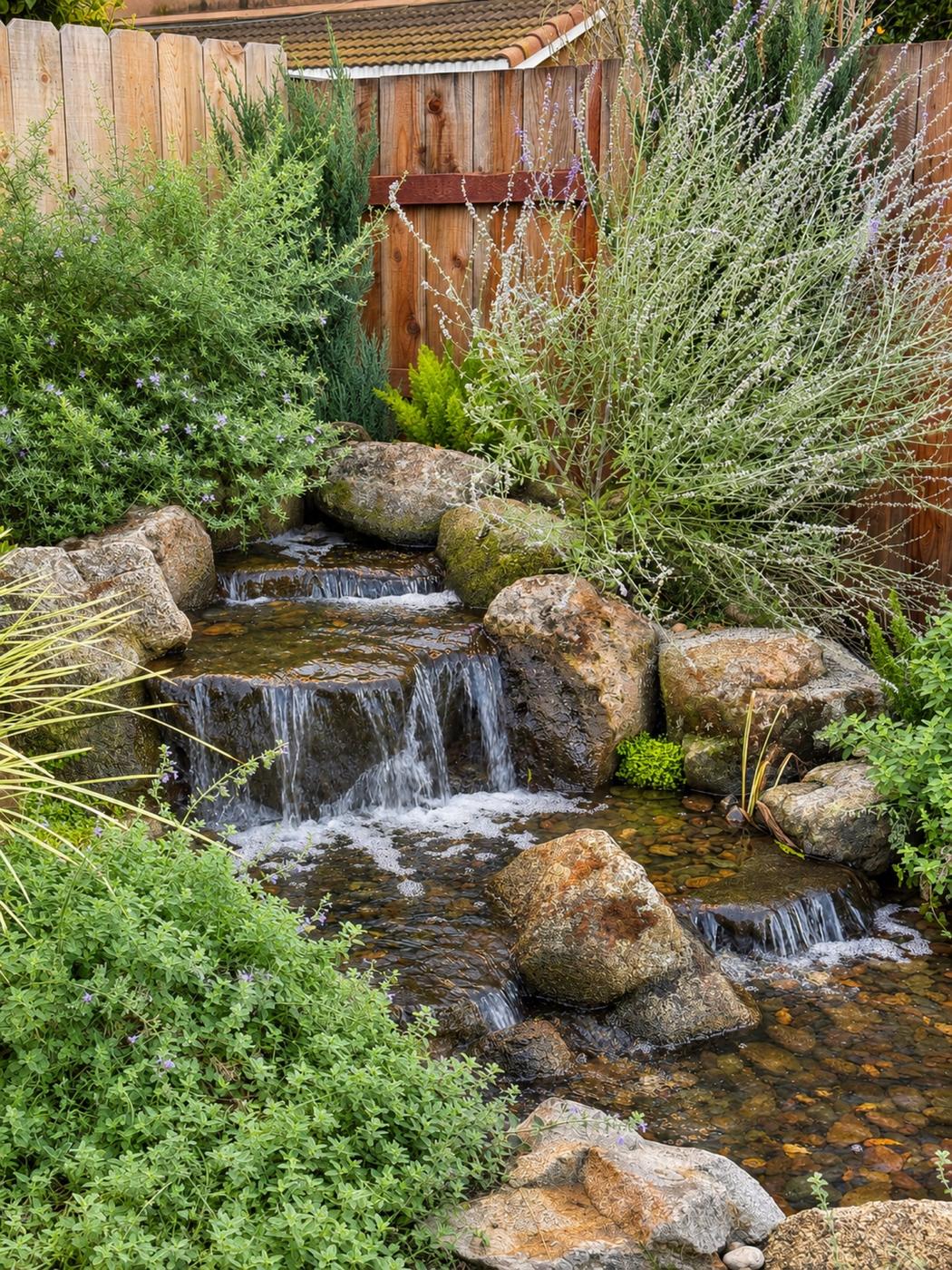
It is the first question most people ask when they decide they want water in the yard. Both give you the sound of falling water. The difference is what waits at the bottom of the falls: an open pond you can look into, or a hidden basin under gravel.
How a Pondless Waterfall Works
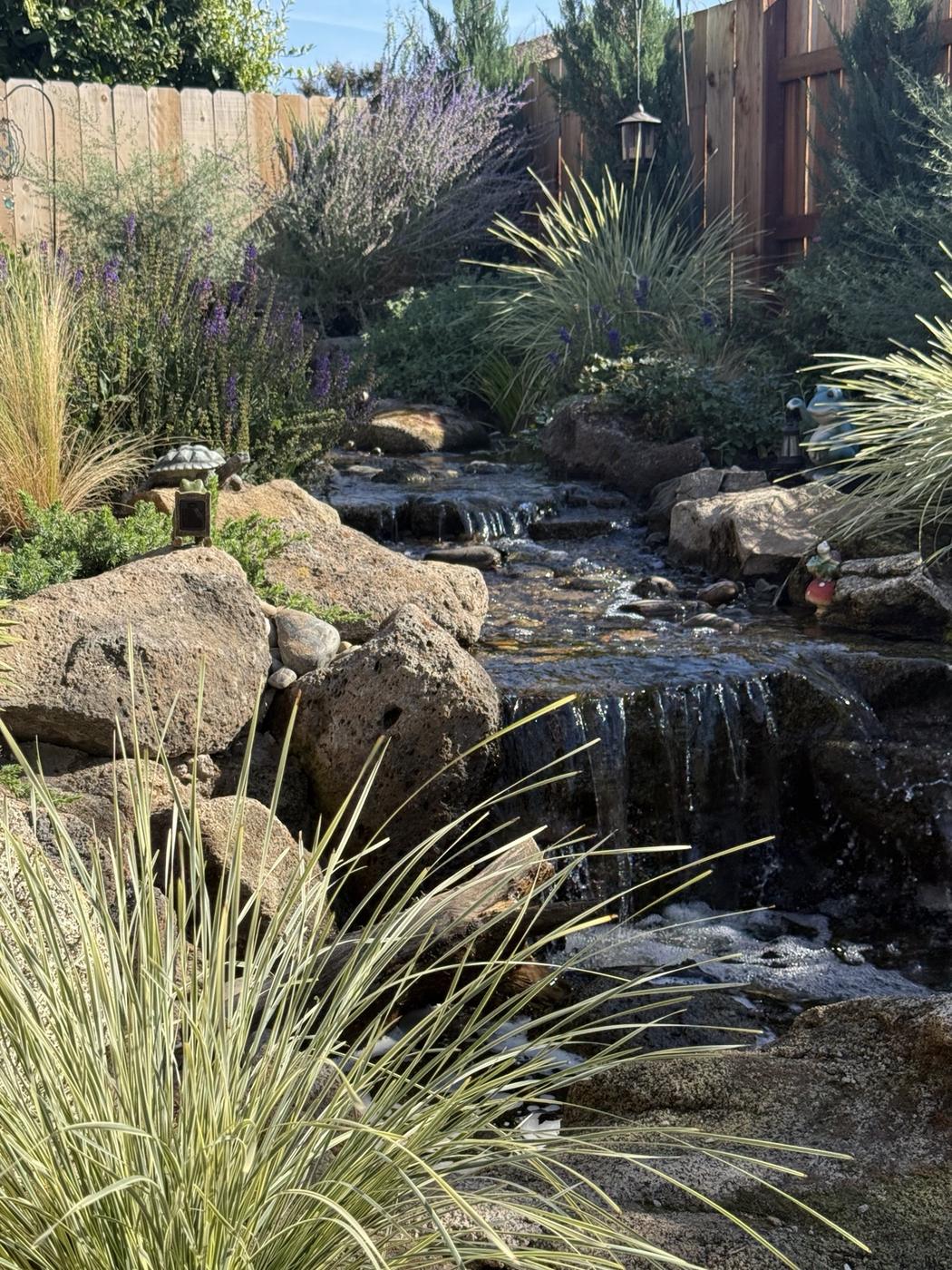
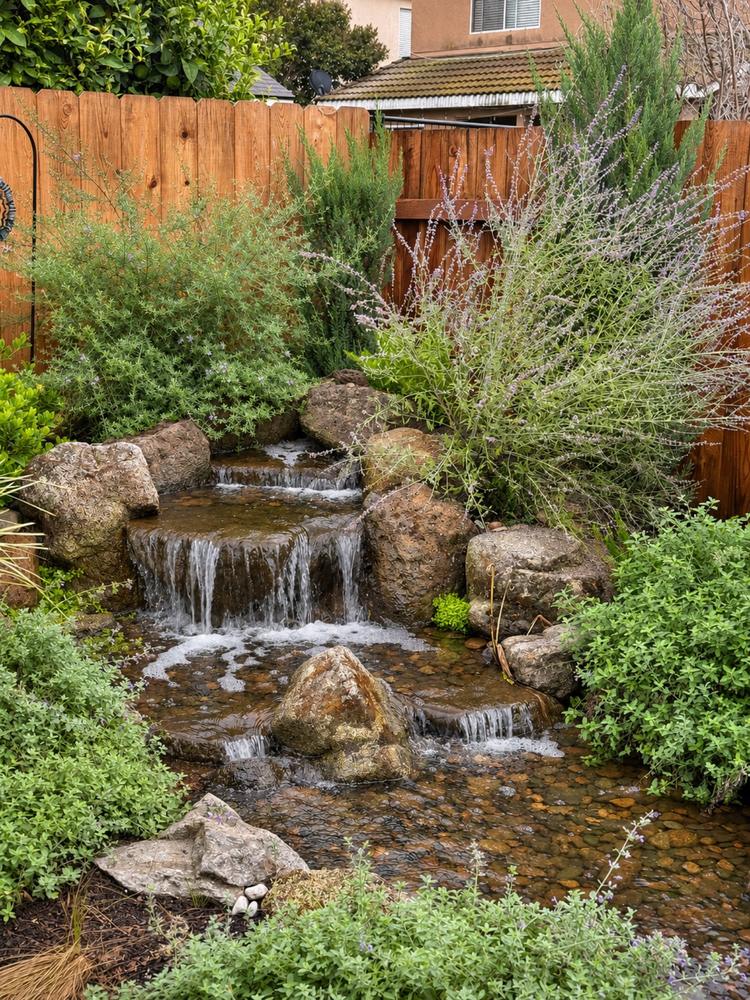
Water runs over the rocks or down a stream, then drops into a basin buried under gravel and stone. A pump in that basin sends it back to the top. You see and hear moving water, but there is no open pool at the bottom.
- Less upkeep. With no open water there are no fish to feed and far less to clean.
- No open pool. Small children and pets can play nearby without deep water to fall into.
- Fits small spaces. A pondless stream works in a side yard or along a patio edge.
- Off when you want. You can switch it off when you are away and the water stays in the basin.
How a Pond Works
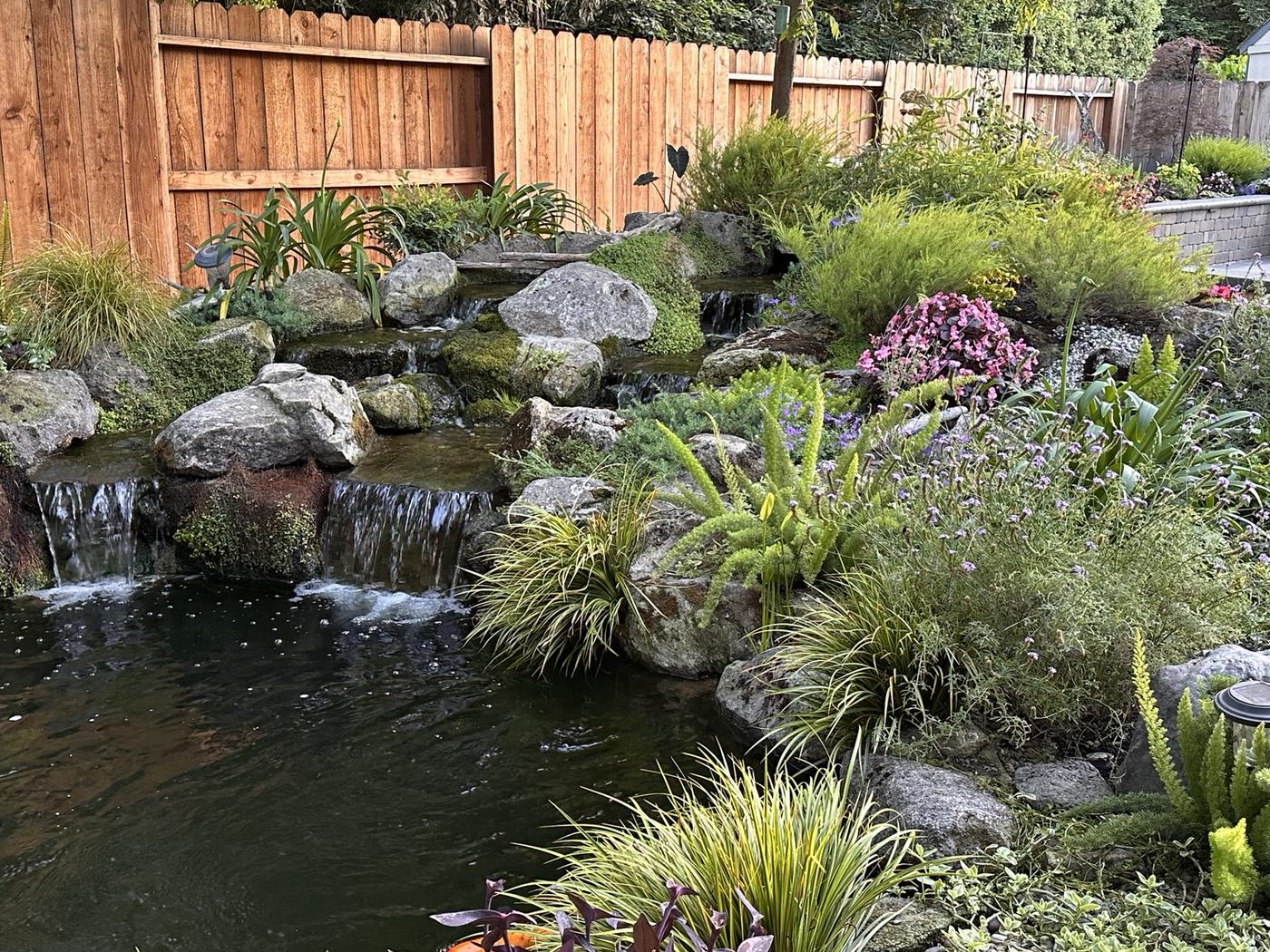
A pond holds open water you can see into, usually fed by a waterfall or stream. It has a filter sized for the water and the fish, shelves for water plants, and a pump that keeps it moving. It is a living garden, and that is the appeal.
- Fish and plants. Koi, goldfish and water lilies need a pond.
- A place to sit. A pond gives you water to look into from a bench or patio, not only to listen to.
- More care. Feeding, filter cleaning and seasonal cleanup come with it.
Five Questions That Decide It
- Who uses the yard? With young children or grandchildren around, a waterfall without open water is the safer choice, as The Pond Guy's guide also points out.
- Do you want fish? If yes, you need a pond. If you only want the sound and movement, pondless does it with less work.
- How much time will you give it? Pondless features need little beyond an occasional top-up and check. A pond rewards someone who enjoys tending it.
- How much room do you have? A pond needs space to look right. A pondless stream can be narrow.
- What should it sound like? We set the drop height and the stones so the falls sound right from where you sit, whichever you choose.
What the Central Valley Changes
Heat and evaporation. Valley summers pull water out of any feature. An automatic fill line keeps the level steady so the pump never runs dry.
Mosquitoes. Mosquito larvae need still, shallow water. UC IPM recommends water deeper than 2 feet, steep sides and a waterfall or fountain to keep the water moving. A well-built pond or pondless feature does all of that. Read more in Do Water Features Attract Mosquitoes?
Water rules. The City of Modesto allows ornamental fountains that use recirculated water, and both ponds and pondless features recirculate. The planting around them goes on drip.
Can You Have Both?
Yes. A raised pond can spill into a pondless basin, so you keep fish and plants up top while the falls end in gravel instead of open water. You can also start with a pondless stream and plan room to add a pond later.
See Both Before You Choose
If you are torn, we can show you both in 3D. You walk through your own yard on screen with a pond, then with a pondless stream, and choose the one that feels right. The 3D is free with the purchase of a 2D design. See the ponds and pondless waterfalls we build in Modesto, or browse our water features.
Sources
- The Pond Guy: Should I Build a Pond or a Pondless Water Feature?
- UC IPM: Mosquito Management for Ponds, Fountains, and Water Gardens
- City of Modesto: Watering Schedule (ornamental fountains)
Checked November 24, 2026. Rules, programs and prices change; confirm with the agency or maker before you start.