
Ponds and Koi
Do Water Features Attract Mosquitoes?
It is one of the first worries people have about a pond or waterfall, especially in the Valley in summer. The honest answer has two parts: what draws mosquitoes, and what lets them breed.
Why Still Water Is the Problem
Mosquitoes lay their eggs in, on or near stagnant water. The larvae live in the water and must come to the surface to breathe. According to UC IPM, the whole cycle from egg to biting adult can take as little as a week, and even an ounce of standing water can support larvae. That is why a forgotten bucket or a clogged gutter is often the real source.
UC IPM is also clear that water features will attract some adult mosquitoes. The goal is not a yard with zero mosquitoes. It is a water feature where larvae cannot survive.
What Keeps a Water Feature Mosquito-Free
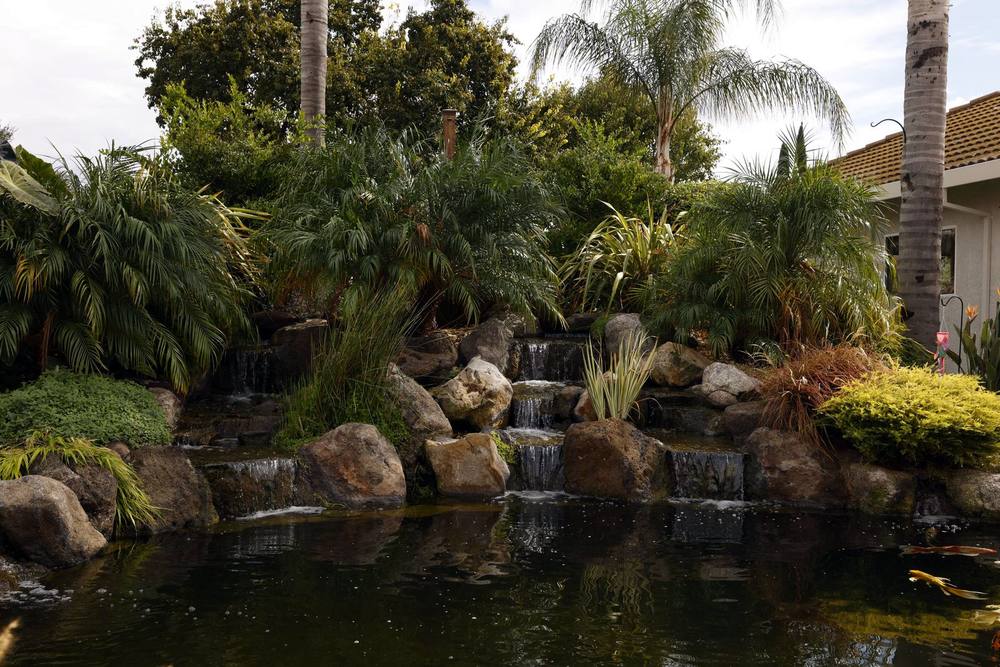
- Keep the water moving. A waterfall, stream or fountain breaks the still surface larvae need. UC IPM lists added circulation as a key step.
- Go deeper than 2 feet. Larvae prefer water shallower than 24 inches, so UC IPM recommends features deeper than 2 feet.
- Build steep sides. Edges that drop quickly into deep water give larvae nowhere shallow to hide.
- Keep it clean. Removing excess plants and debris takes away the food and shelter larvae use. A skimmer helps on larger ponds.
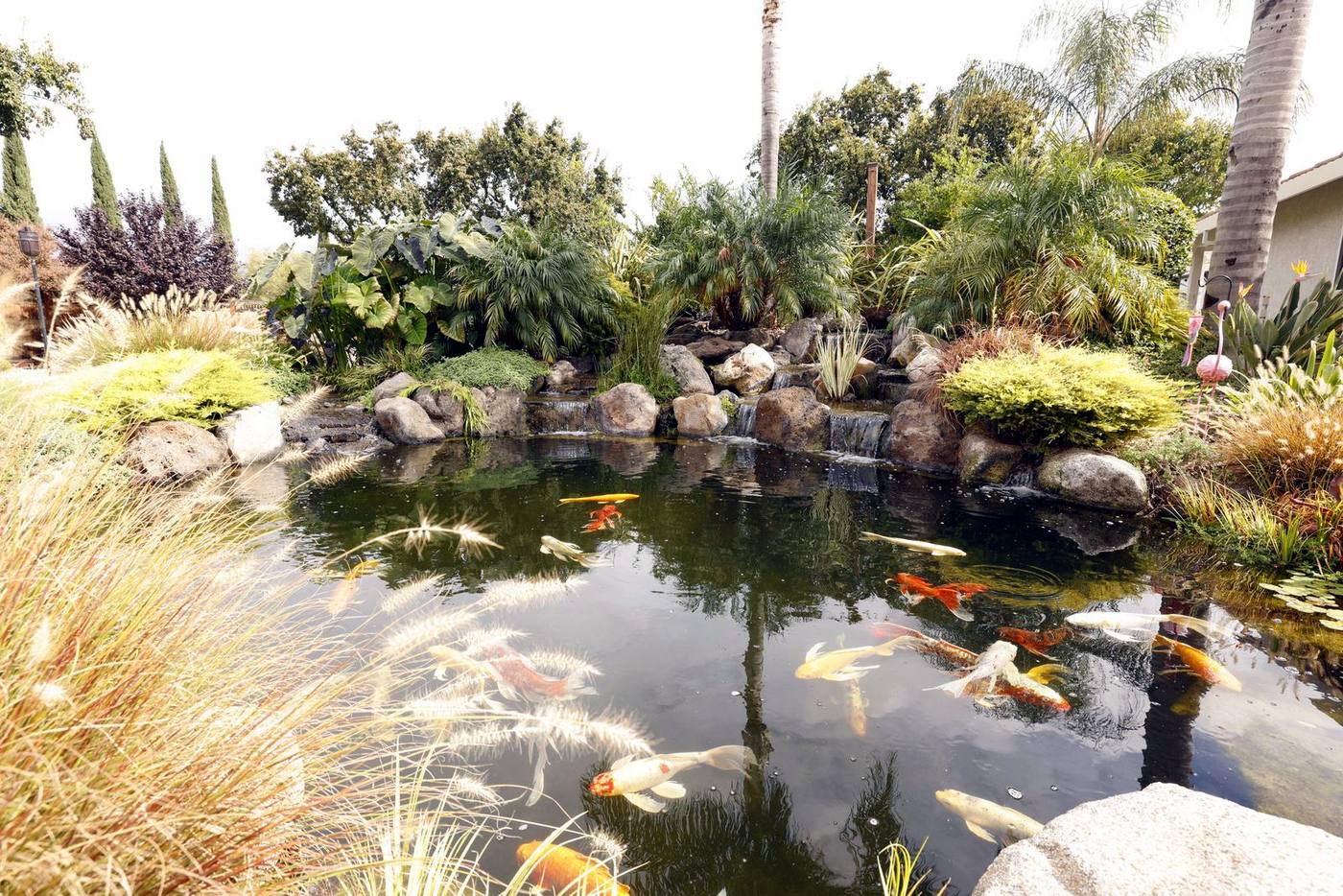
- Let predators work. Fish, dragonflies and other insects eat larvae. Avoid broad insecticides that kill them too.
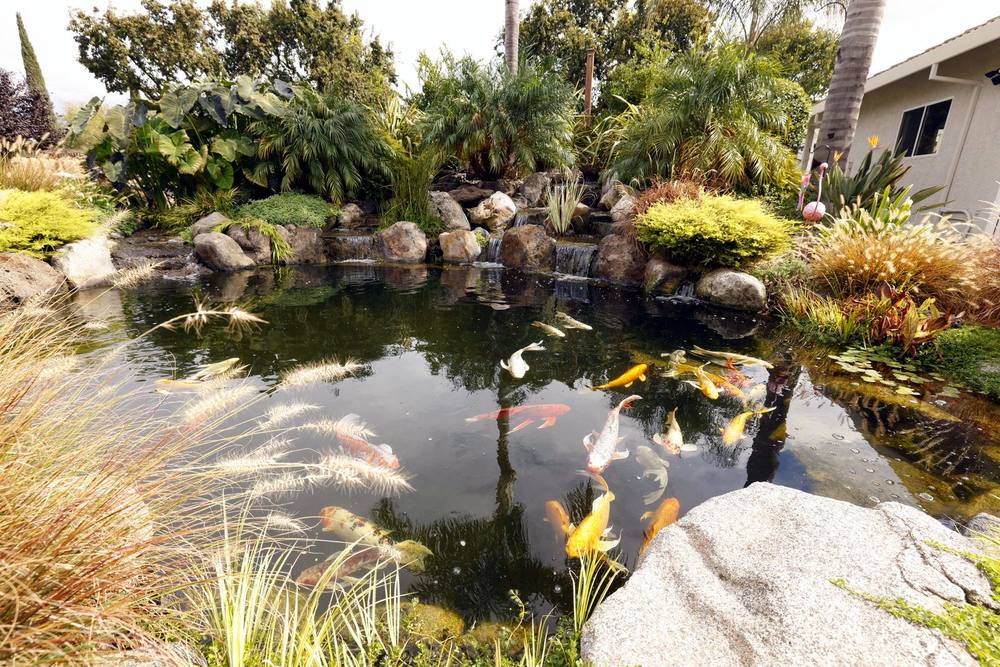
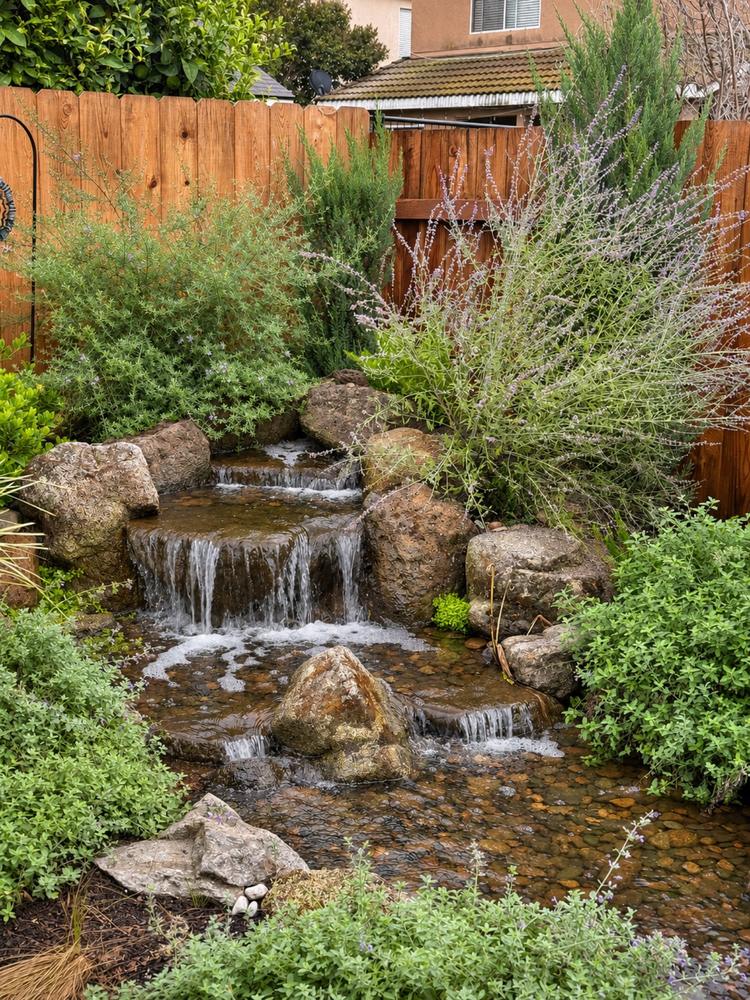
A pondless waterfall has an advantage here: the water drops into a covered basin under gravel, so there is no open, still pool at the bottom. Every Green Lion pond and pondless feature recirculates, so the water is moving whenever the pump runs.
Free Mosquitofish From Your District
Mosquitofish eat mosquito larvae, and the local mosquito districts give them out for ornamental ponds:
- Turlock area: the Turlock Mosquito Abatement District has mosquitofish at its office, usually from May to October. You can pick them up on weekdays from 8 a.m. to 3 p.m. or ask for an operator to place them. Call (209) 634-1234.
- Tracy, Mountain House and San Joaquin County: the San Joaquin County Mosquito and Vector Control District has offered free delivery of mosquitofish for water features and ornamental ponds anywhere in the county. Call (209) 982-4675.
- Modesto area: the East Side Mosquito Abatement District takes mosquitofish requests through its website. Not sure which district serves your address? The Turlock and East Side district websites both have service maps.
One rule matters: never release mosquitofish into creeks, canals or other natural water. UC IPM notes they are not native to California and can disrupt the ecosystem. They belong in a closed garden pond only.
If You Do See Wigglers
Check still corners and plant shelves now and then for larvae wriggling near the surface. If you find them, UC IPM points to larvicides made with Bti, sold as Mosquito Dunks and Mosquito Bits, which affect only fly larvae and leave the rest of the pond alone. Use any product only as its label directs. Then look for the cause: often a pump that stopped, or a corner the water no longer reaches.
The Short Version
A water feature that is deep enough, kept moving and kept clean rarely breeds mosquitoes, and it is usually far less of a problem than the standing water elsewhere in a yard. If you are planning a pond in Modesto, Turlock or Tracy, we design it with depth, circulation and easy cleaning from the start.
Sources
- UC IPM: Mosquito Management for Ponds, Fountains, and Water Gardens
- Turlock Mosquito Abatement District: Request Mosquitofish
- San Joaquin County Mosquito and Vector Control District: mosquitofish notice
- East Side Mosquito Abatement District: FAQs and mosquitofish requests
Checked November 24, 2026. Rules, programs and prices change; confirm with the agency or maker before you start.