
Ponds and Koi
How Do I Care for Koi and a Pond in Winter?
Koi ask very little of you in winter. Aquascape calls winter pond care minimal. Most of the work happens in fall, and the main thing to get right is feeding as the water cools. Much of the advice online is written for ponds that freeze over for months. Whatever your winter looks like, the same basics apply: water temperature, feeding, leaves and oxygen.
Go by Water Temperature, Not the Calendar
Purdue's Paul Brown, a professor of forestry and natural resources, calls water temperature the most reliable gauge for fish care. Keep a pond thermometer in the water and check it as fall goes on. Koi are cold-blooded, so their body temperature follows the water. The Pond Guy explains that once the water dips below 50°F, koi enter torpor, a semi-dormant state a bit like hibernation. They hardly move, their digestion stops and they tend not to eat.
Feed Less as the Water Cools
The guides differ on the exact cutoff, but they agree on the direction: less food, then lighter food, then none.
- As the water cools: cut back the amount. Fish naturally eat less as they slow down, and less food means less waste in the pond (The Pond Guy).
- Below 50°F: stop the summer food. Aquascape and The Pond Guy switch to a cold-water or wheat-germ food that is easier to digest. Kansas State's extension calendar goes further and says to stop feeding fish below 50°F.
- Below 45°F: Alabama's extension guide says not to feed at all. Fish metabolism slows, and uneaten food creates water quality problems.
- Below 40°F: The Pond Guy's point for stopping all feeding.
When in doubt, feed less. The Pond Guy notes that koi live off the fat reserves they stored up in summer. Alabama's guide says fish should finish their food quickly, within about 5 minutes, and that it is good practice to net out anything left over.
Clean Up in Fall
- Get the leaves out. Purdue botanist Carole Lembi explains that decaying leaves give off gases that dissolve in the water and can harm fish. Skim often, empty the skimmer net, and consider netting the pond while the trees drop.
- Trim back lilies. Aquascape suggests cutting water lilies back before they die off, so less debris is left on the bottom in spring.
- Change water early, if at all. Purdue says most ponds do not need a water change. If yours is very dirty, change about two-thirds of the water at most, and finish before the water drops below 50°F so the fish are not disturbed. Alabama's guide notes that city water must be dechlorinated before it goes in.
Keep Oxygen in the Water
Aquascape recommends running a pond pump 24 hours a day for fish health and good water all year. Every Green Lion pond recirculates, so the falls are already doing this job. A few more tips:
- Mind the air stone. If you run an aerator, The Pond Guy suggests moving the stone to about halfway between the surface and the bottom as the water cools, so the warmer water at the bottom stays undisturbed for the fish.
- Never hit the ice. If a cold snap ever skins the pond with ice, leave it be. Kansas State warns that hitting the ice sends a shockwave that can kill fish and is hard on the liner. A running pump, aerator or de-icer keeps an opening so gases can escape, Aquascape notes.
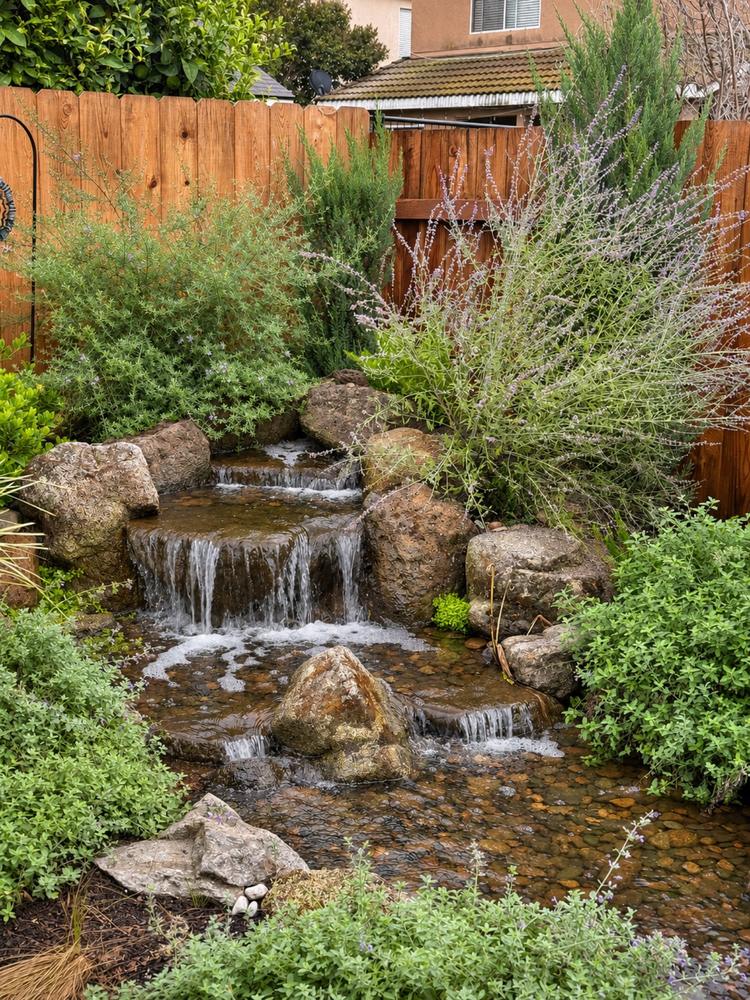
- Check shallow streams. In freezing weather, Aquascape suggests checking shallow streams and falls for ice dams.
Leave the Fish Alone
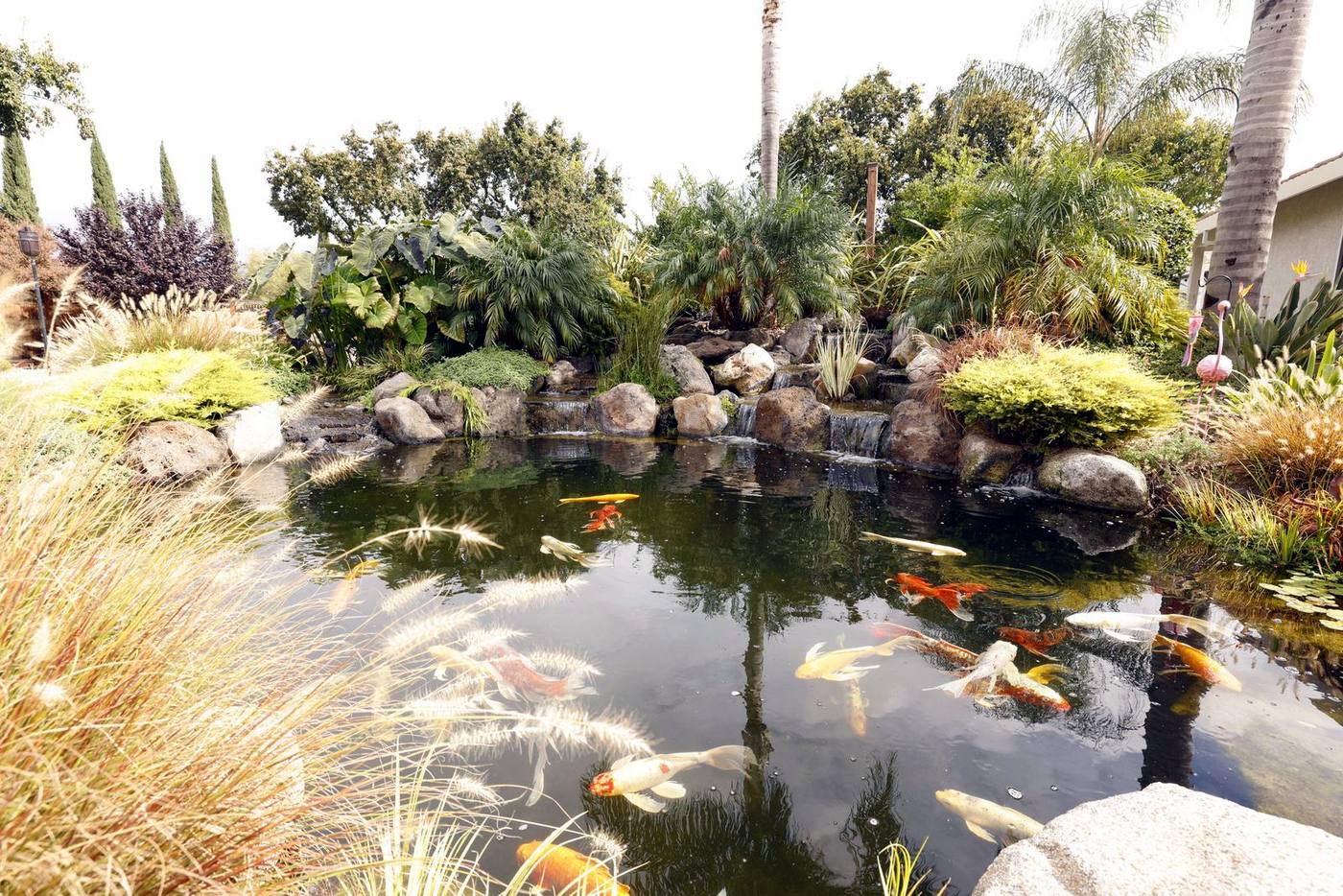
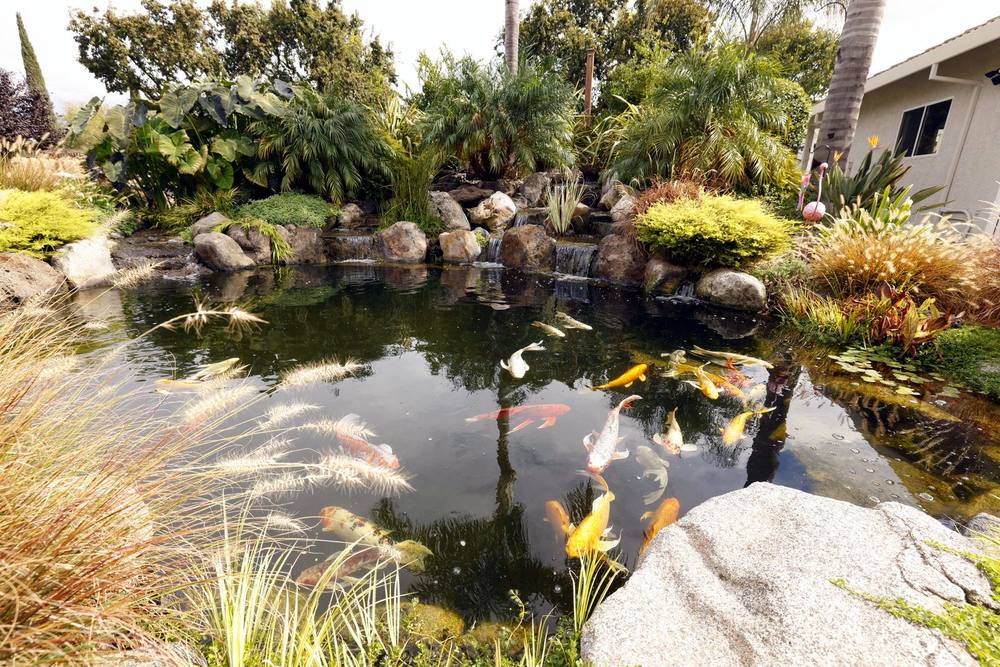
Dormant koi often hover upright near the bottom with their fins tucked in, barely moving. The Pond Guy's advice is to keep an eye on them but not to try to wake them. Watch instead for signs of trouble. Alabama's guide says fish gasping at the surface is almost a sure sign of low oxygen, and aeration should start right away. It also lists flashing (turning sideways and rubbing on objects), whirling and visible sores as signs of stress or disease, worth a call to a veterinarian trained in fish.
Waking Up in Spring
As the water warms back above 50°F, start again slowly. Kansas State's calendar says to begin feeding above 50°F, and Aquascape starts with its cold-water food at that point. The Pond Guy suggests easing in so the fish can get their appetite back. Spring is also the time Kansas State lists for cleaning the pump, flushing hoses and starting the biofilter.
Planning a Pond?
A pond that is easy to care for in winter starts with its design: depth, a skimmer, room for plants and constant circulation. See the koi ponds we build in Modesto, or read about our water feature work.
Sources
- Purdue University News: November last call for winterizing garden ponds
- Kansas State University Research and Extension: Water Gardening: Maintenance (MF2913)
- Alabama Cooperative Extension System: Ornamental Garden Pools (ANR-789)
- The Pond Guy: Do Koi Fish Need a Heater for Winter?
- The Pond Guy: Seasonal Feeding
- The Pond Guy: Overwintering Koi and Goldfish in Your Pond
- Aquascape: Your New Ecosystem Pond Owner's Manual (PDF)
Checked November 24, 2026. Rules, programs and prices change; confirm with the agency or maker before you start.