
Water Features
How Do I Keep a Water Feature Clean and Stop Algae?
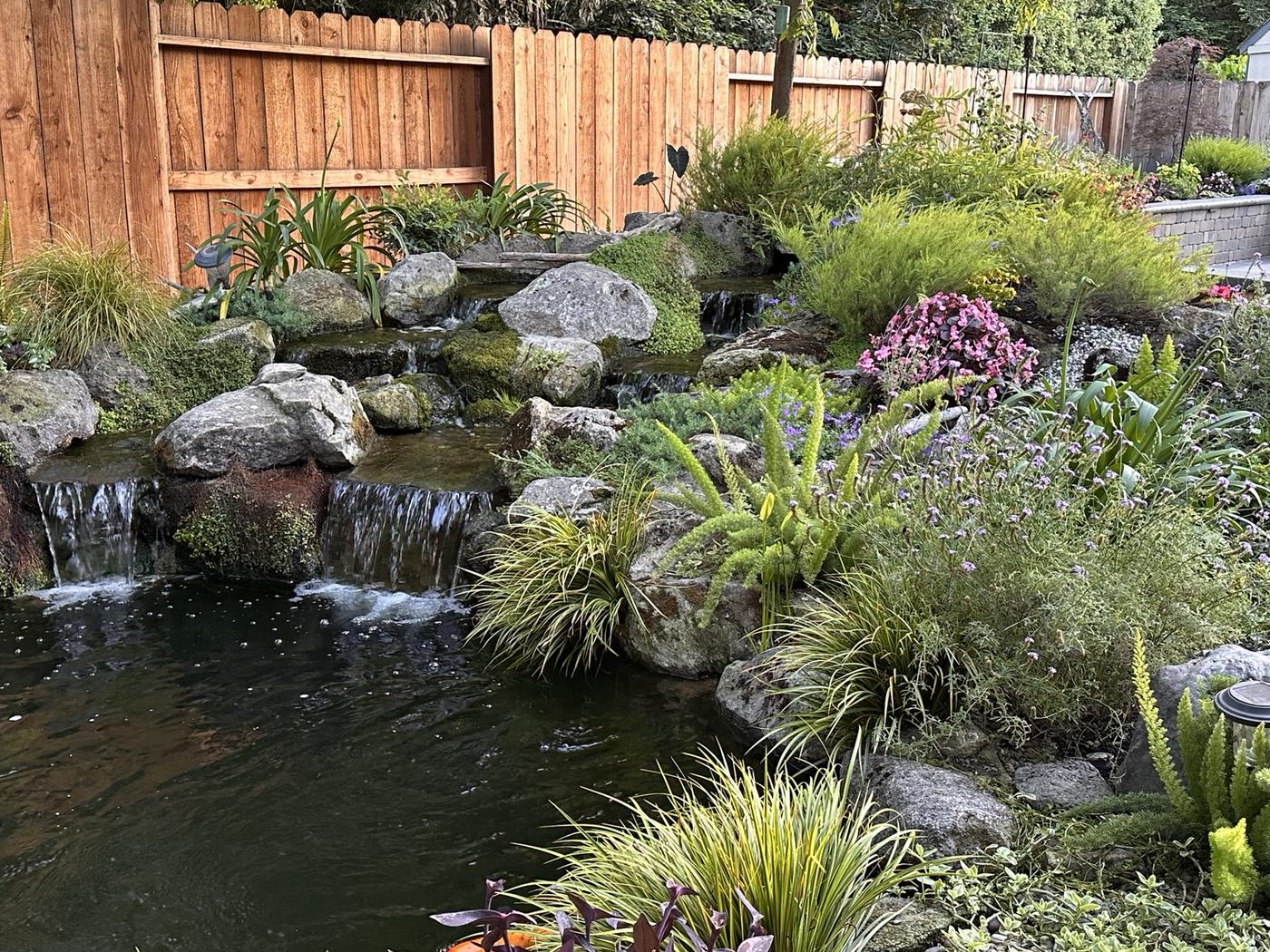
Every water feature grows some algae. New Mexico State's extension guide calls algae a natural and essential part of a healthy pond, and a little green on the rocks helps a stream look settled in. The goal is to keep it from taking over: no pea-soup water and no thick mats.
Know Which Algae You Have
- Green water. Planktonic algae are microscopic cells floating in the water. Penn State Extension notes a bloom can color the water within a day or two.
- String algae. Filamentous algae grow as threads on rocks, plants and the pond floor, then tangle into mats that look like wet wool, as The Pond Guy and New Mexico State describe them.
They need different fixes, so it pays to know which one you are looking at.
What Feeds It
Algae grows on nutrients plus sunlight. The Pond Guy points to excess fish waste and dead organic matter from leaves or earlier blooms, combined with strong sun. Alabama's extension guide adds uneaten fish food and fertilizer for pond plants, and says a heavy bloom is usually a sign the water holds too many nutrients. You cannot turn down the Valley sun, so nutrients are the main thing to control, with shade where you can add it.
Steps That Keep It in Check
- Don't overfeed or overstock. Alabama's guide calls this the best way to prevent blooms. Fish should finish their food within about 5 minutes. Aquascape's rule of thumb is at least 10 gallons of water for each inch of fish.
- Add plants. Plants use the same nutrients algae do. Aquascape notes that submerged plants compete with algae directly, and Alabama's guide says pond plants also act as filters and shade.
- Keep leaves and debris out. Empty the skimmer net or basket as needed and pull out excess debris, as Aquascape advises. In summer, Kansas State's calendar says to clean pump intake screens, nets and pump filters every other week.
- Keep the water moving. New Mexico State notes that good aeration and water flow help reduce algae. Aquascape recommends running the pump 24 hours a day. Moving water also helps with mosquitoes; see Do Water Features Attract Mosquitoes?
- Use beneficial bacteria. Pond makers sell bacteria to break down fine debris. Penn State reports mixed results with bacteria and enzyme products, so treat them as one tool, not a cure.
- Change some water. Flushing with fresh water dilutes nutrients, Alabama's guide notes. City water must be dechlorinated before it goes in.
For Green Water: A UV Clarifier
A UV clarifier runs water past an ultraviolet bulb that breaks down floating algae cells, and the filter catches the clumps. It does nothing for string algae. The Pond Guy's tips: replace the bulb every year, because worn bulbs can still light up but lose strength, and keep the flow in the range the unit is made for, neither too fast nor too slow. It also calls UV one of the last tactics to reach for. Fix the nutrient balance first.
For String Algae: Pull It Out
Net, rake or brush it off, and dump it well away from the water so the nutrients do not wash back in, Penn State advises. New Mexico State notes it can go in the compost or be used as garden mulch. On waterfall rocks, The Pond Guy suggests oxygen-based algae cleaners applied with the pump off, following the label. Fish help too: Aquascape notes koi and goldfish graze on string algae.
Be Careful With These
- Algaecides in fish ponds. When a lot of algae dies at once, its decay can use up the oxygen and kill fish. New Mexico State suggests treating no more than 25% of the surface at a time, then waiting two weeks, and warns that copper sulfate can be lethal to fish at the doses that control algae, with ornamental goldfish particularly sensitive. Alabama's guide does not recommend herbicides for algae in fish pools. Always follow the label.
- Barley straw. Penn State says it slows new algae growth but does not kill existing algae, works best added before algae appears, and has given very inconsistent results. Too much can strip oxygen from the water as it decays.
- Power washing. Kansas State says never to power wash a pond liner. The film on the sides is home to beneficial microorganisms.
Pondless Features Get Algae Too
No fish does not mean no algae. The Pond Guy notes that nutrients still build up in a covered basin and feed string algae on the rocks. The same habits apply: beneficial bacteria, an algae cleaner for the rocks, a partial water change when the water looks discolored, and the water level kept up.
Design Does Half the Work
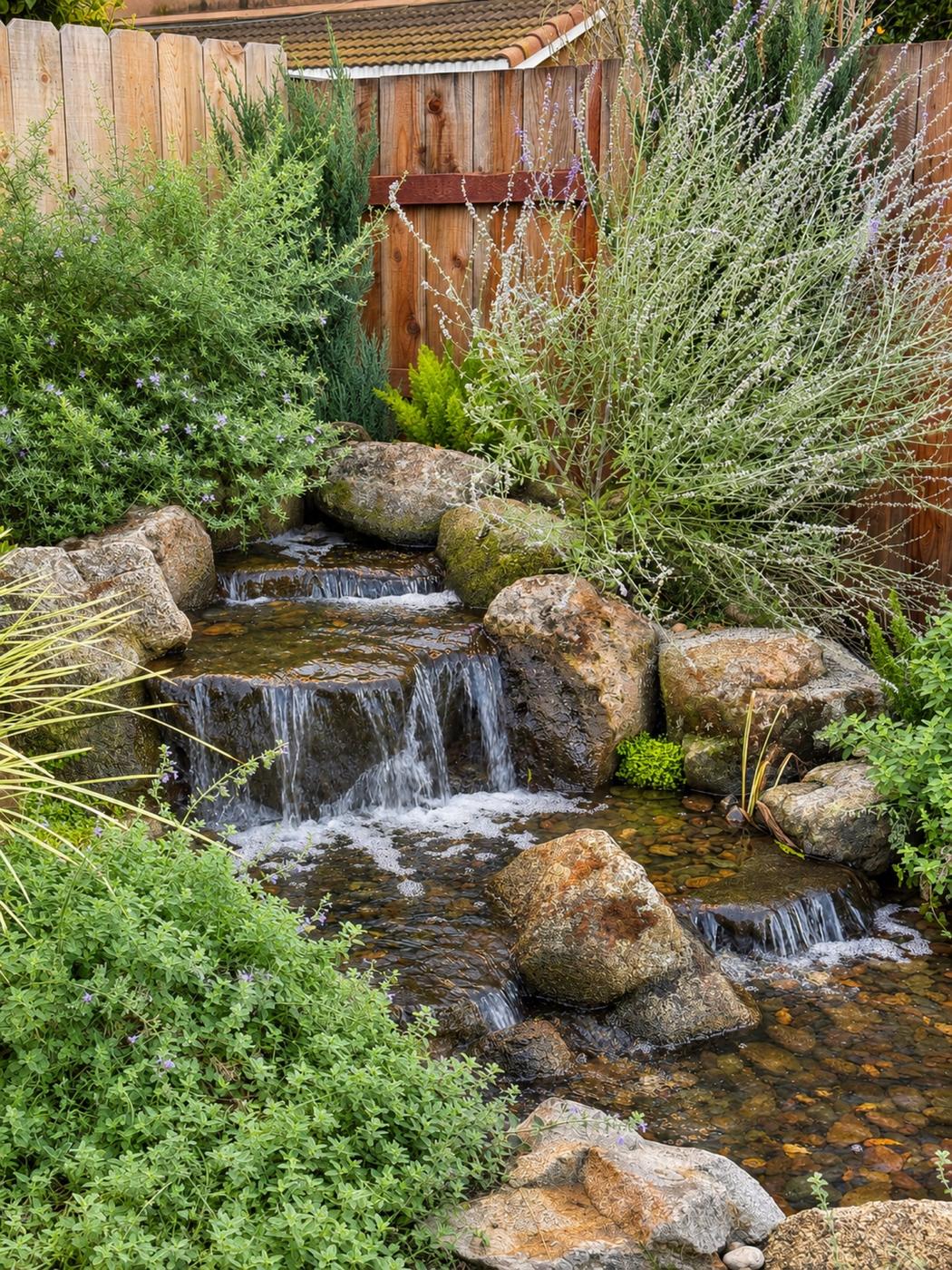
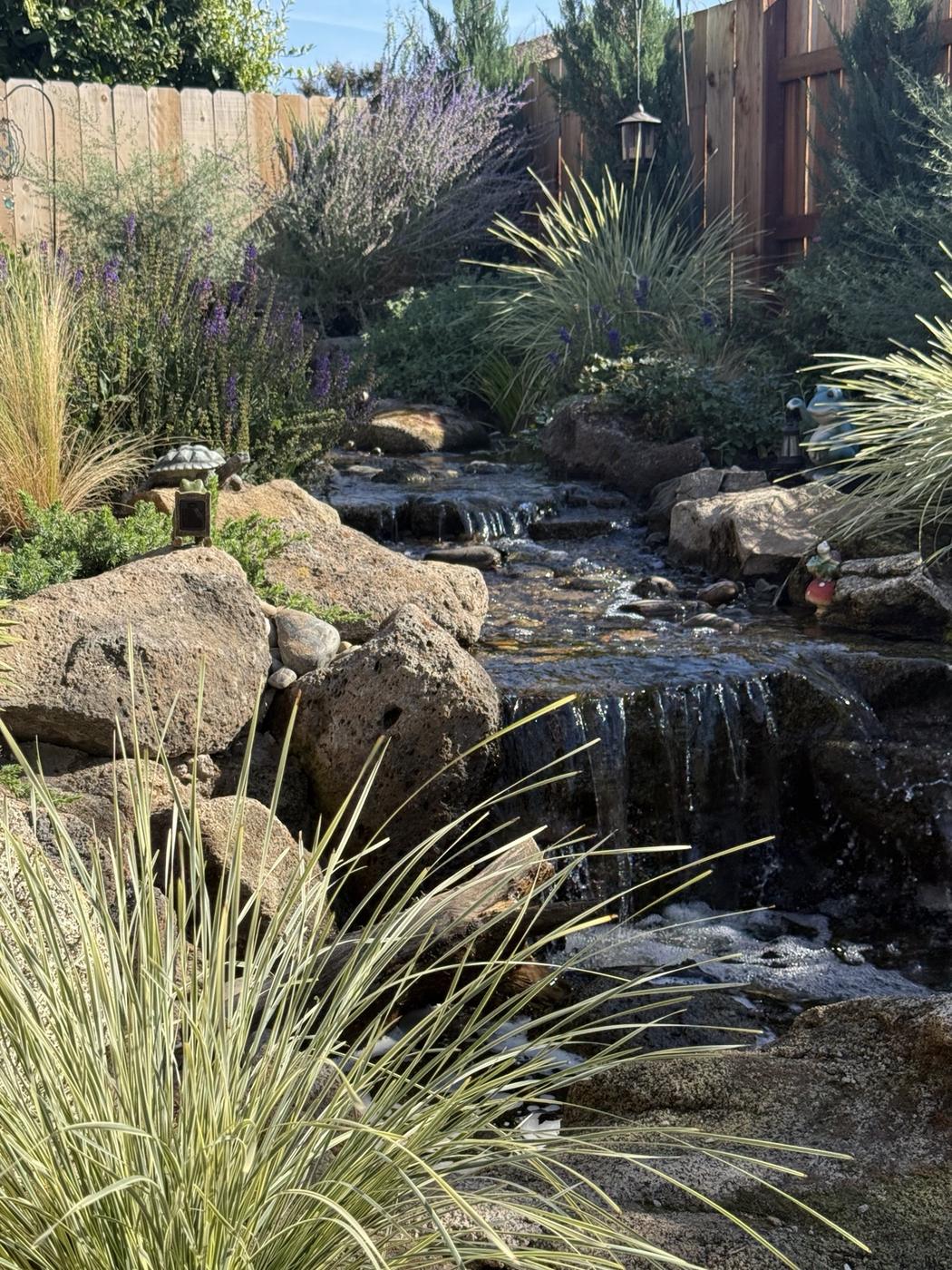
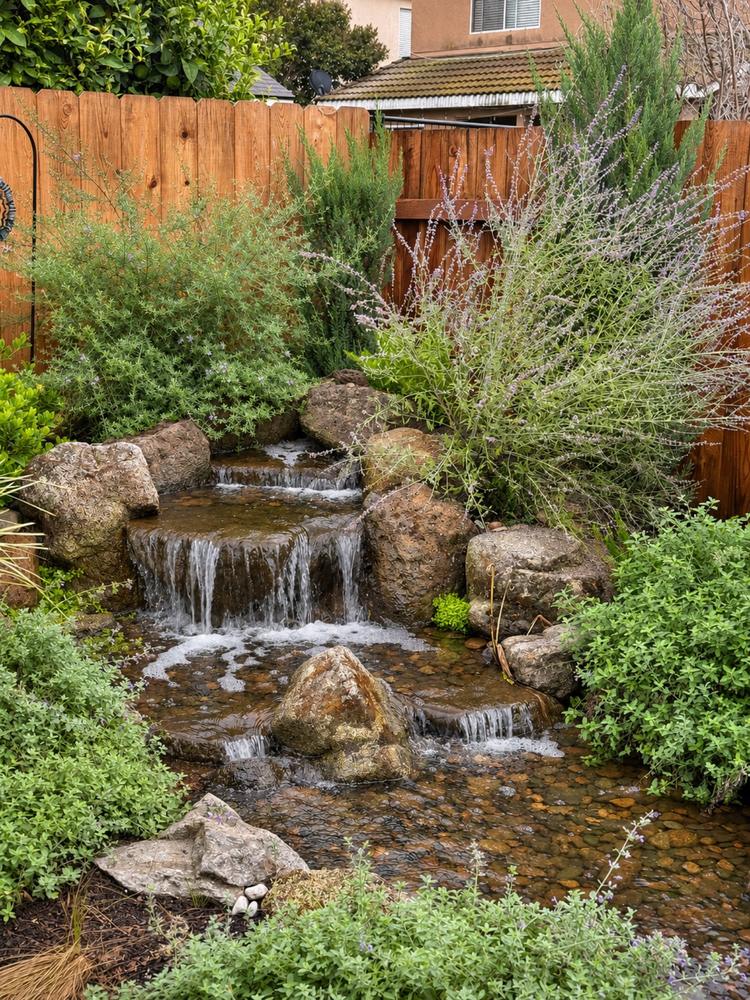
Shade, plants to the waterline and constant circulation keep algae down before it starts. Every Green Lion pond and pondless feature recirculates, with an auto-fill line to keep the level steady through summer. See how those pieces come together in our water feature gallery.
Sources
- Alabama Cooperative Extension System: Ornamental Garden Pools (ANR-789)
- New Mexico State University Extension: Managing Filamentous Algae in Ponds (W-103)
- Penn State Extension: Filamentous Algae
- Penn State Extension: Planktonic Algae
- Penn State Extension: Barley Straw for Algae Control
- Kansas State University Research and Extension: Water Gardening: Maintenance (MF2913)
- The Pond Guy: Will a UV Take Care of All the Algae Growth?
- The Pond Guy: Pondless Feature Maintenance
- Aquascape: Your New Ecosystem Pond Owner's Manual (PDF)
Checked November 24, 2026. Rules, programs and prices change; confirm with the agency or maker before you start.