
Pavers and Patios
Which Patio Surfaces Stay Coolest in Summer?
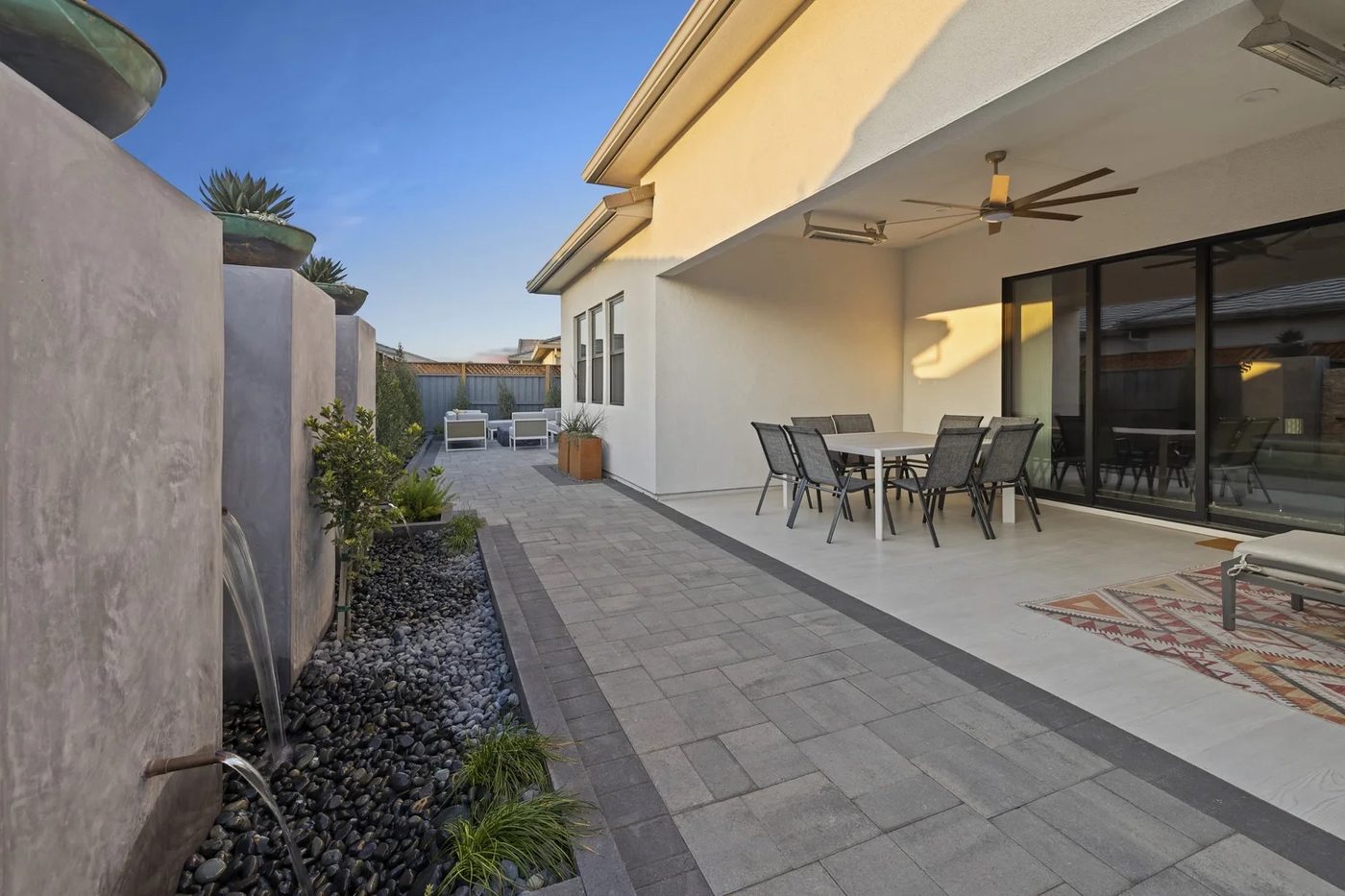
On a summer afternoon, the wrong patio can be too hot to cross barefoot. The material usually gets the blame, but the research points somewhere else: color and shade.
What a Desert Study Measured
In 2020, UNLV surgeons and engineers set out samples of asphalt, brick, concrete, sand, porous lava rock and galvanized metal on the roof of an engineering building on the Las Vegas campus. One set sat in direct sun and a matching set sat in shade, and sensors logged their surface temperatures through the spring and summer.
The peak came on August 6, 2020, at 2:10 p.m., with the air at 120°F:
- Porous lava rock: 170°F
- Asphalt: 166°F
- Brick: 152°F
- Concrete: 144°F
- Sand: 143°F
Two findings matter more than the ranking. The shaded samples ran 36 to 56°F cooler than the same materials in the sun at the same moment, and none of them reached 110°F, the level the researchers give for burns. And the sunlit surfaces took 9 to 11 hours after their peak to cool back to where they started, so a patio that bakes all afternoon is still warm after dinner.
This was a desert rooftop, not a Valley backyard, and it did not test concrete pavers, porcelain or flagstone. What it shows is how much the sun, more than the material, drives the heat.
Color Beats Material
For the surfaces the study skipped, the best numbers come from makers' own testing, so read them as that.
- MSI, which makes Arterra porcelain pavers, says the surface temperature of pavers "is largely a function of color, not material." In its tests on a hot day, porcelain ran about the same as natural stone of a comparable color and was generally cooler to the touch than concrete pavers. Dark stone ran hotter than light porcelain.
- Daltile publishes Solar Reflectance Index (SRI) test results for colors of its TREAD 2cm porcelain pavers. SRI runs from 0 to 100, and the higher the number, the cooler a surface stays in direct sun. The results run from about 24 for its Lanesboro Bluestone color to about 65 for its whites. Daltile says its white, cream and light gray colors absorb and hold 5 to 20% less heat than concrete, while its dark gray, black and brown colors often test 10 to 22% hotter, by Daltile's figures.
Surface by Surface
- Porcelain. In a light color, one of the coolest choices in full sun by the makers' numbers. In charcoal, it runs hot like any other dark surface.
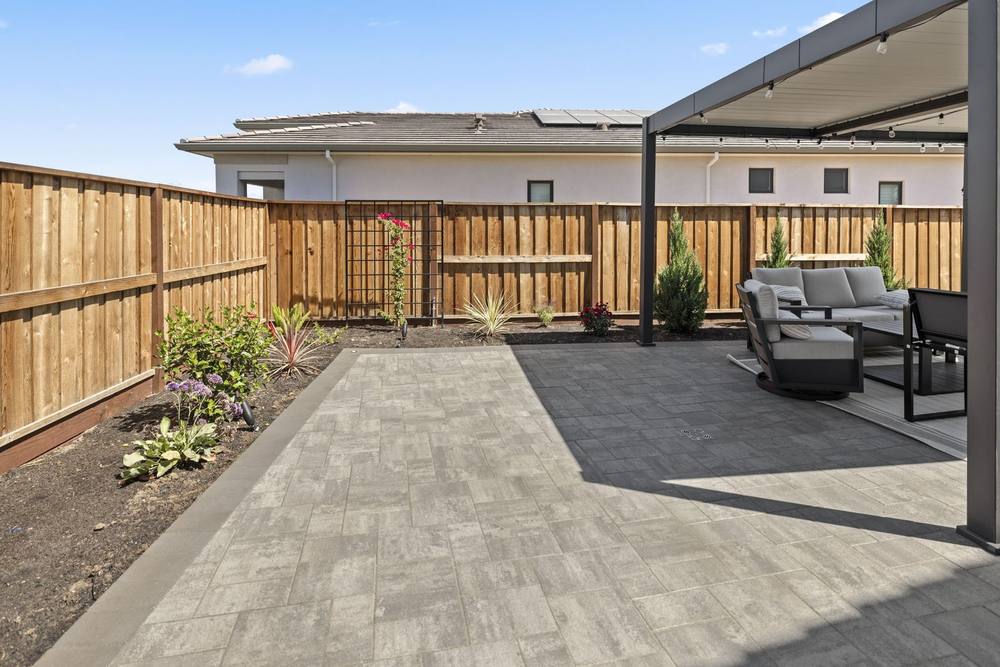
- Concrete pavers. Light gray, tan and buff blends suit open sun. A dark charcoal paver looks great in a shaded courtyard and gets hot on a west-facing patio.
- Poured and stamped concrete. Plain concrete reached 144°F in the UNLV sun. Stamped concrete follows the same color rule: deep browns and charcoals will run hotter than light tones.
- Natural stone. In MSI's tests, stone behaved much like porcelain of the same color, and dark stone ran hotter than light.
- Decorative rock. Porous lava rock was the hottest surface in the UNLV study. Keep it away from anywhere people walk barefoot.
Shade Does More Than Any Material
The UNLV numbers make the case: shade took 36 to 56°F off every surface tested. A louvered pergola, a pavilion, a covered patio or a shade tree over the seating area will do more for comfort than switching materials. The hottest stretch in the study was 2 to 4 p.m., so look at where the afternoon sun lands in your yard and put the shade there.
Two more practical points:
- Save dark colors for shade. MSI says the same about its own range: darker shades are better suited to a shady area, and its lightest shade to places where summer days reach 100 degrees and up.
- Ask for the SRI. If a maker publishes an SRI for a color, compare it with the others you like. A higher number means a cooler surface in the sun.
Planning a Cooler Patio
We build paver, porcelain and stamped concrete patios, along with the pergolas and pavilions that shade them, so we can help you choose by how and when you use the space rather than by one material. See our pavers and decorative concrete work or browse our patios. We can show you the patio in 3D before we build, free with the purchase of a 2D design.
Sources
- Chestovich et al., UNLV: Temperature Profiles of Sunlight-Exposed Surfaces in a Desert Climate (Journal of Burn Care & Research)
- MSI: Arterra Porcelain Pavers FAQs
- MSI: What's Hot Underfoot: Porcelain Pavers Demystified
- Daltile: Solar Reflectance Index (TREAD 2cm porcelain pavers)
Checked November 24, 2026. Rules, programs and prices change; confirm with the agency or maker before you start.