Synthetic Turf
Does Artificial Turf Get Too Hot in a Central Valley Summer?
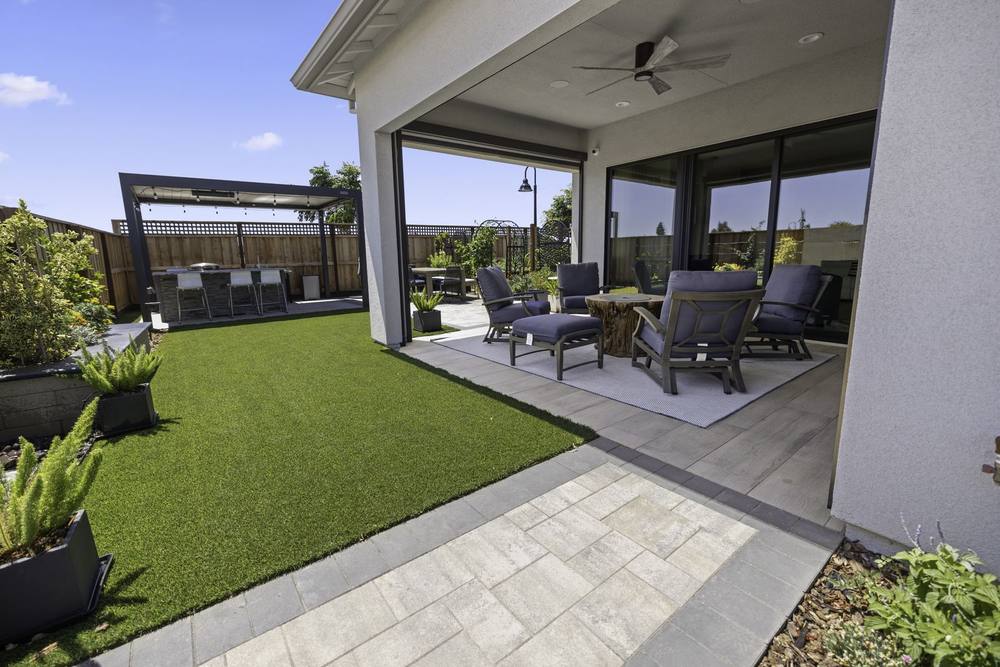
Turf stays green through a Valley summer with no lawn watering, and that is a big part of its appeal. The fair question before you pull yours is how hot it gets in the sun. Here is what the research measured, what it did not, and how to plan around it.
What the Studies Measured
UNLV, Las Vegas. Researchers from UNLV and the Desert Research Institute measured surfaces at a Las Vegas city park and at UNLV's greenhouse complex from August 2006 to March 2007. Green artificial turf reached 169°F. At its peak it ran about 69°F hotter than irrigated natural grass and 62°F hotter than the air. The study missed the two hottest months of the year and tested only one turf product, and the researchers note other products might give different results.
Penn State, central Pennsylvania. Penn State's sports surface researchers measured ten synthetic turf products on test plots. On August 3, 2004, with the air three feet above them at 83 to 87°F, the turf surfaces read 129 to 161°F.
University of Florida. Marco Schiavon, a UF/IFAS turfgrass scientist who has studied turf in California, says artificial turf surfaces can reach 174°F, while natural grass stays closer to 102°F.
What That Means in Modesto, Turlock and Tracy
None of these studies were done in the Central Valley, so there is no measured Valley number to quote. What they agree on is where the heat comes from. The UNLV team traced the fast rise in turf temperature mainly to sunlight, not air temperature. Green turf reacted to the sun faster than any other surface they tested, including concrete, asphalt, natural grass and white artificial turf.
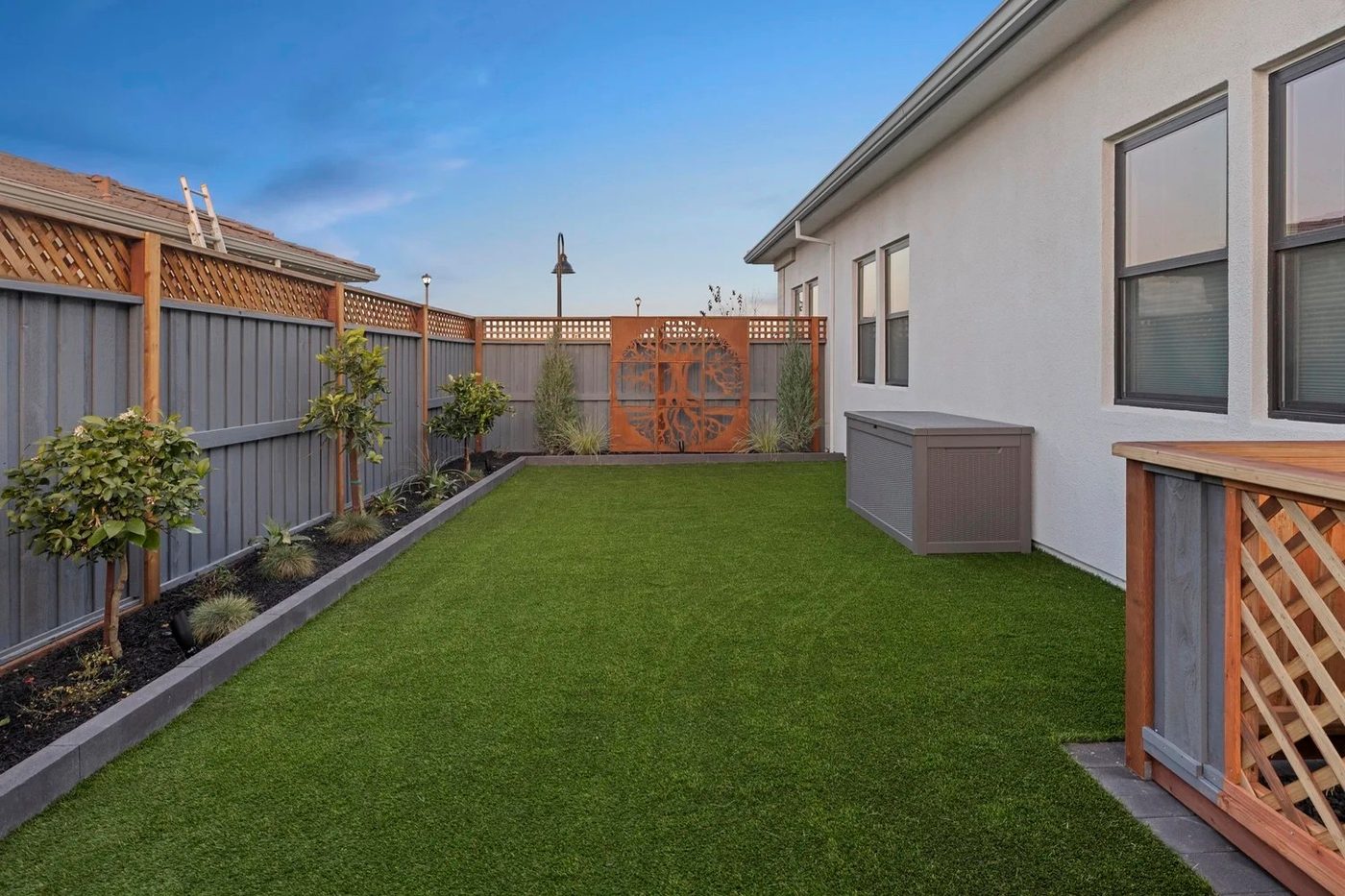
Our practical read: on a clear summer afternoon here, turf in full sun will get too hot for bare feet and paws. In shade, or in the morning and evening, it is a different surface. Plan the yard around that, not around one hot hour.
Does Watering It Cool It Down?
Only for a short while. Penn State reports a Brigham Young University test in which 30 minutes of irrigation brought an infill turf field down to the temperature of nearby grass, about 84°F. Within 5 minutes it had climbed back to about 120°F. In Penn State's own plots, watered turf still measured cooler than dry turf three hours later, but temperatures rebounded somewhat after 15 minutes, and watering before dawn did little for the afternoon.
There is also the water to think about. In California, the UF/IFAS team found artificial turf athletic fields being watered just to make them usable in summer, which eats into the savings that made turf attractive in the first place. A quick rinse before the kids go out takes the edge off. It is not a cooling system.
What Actually Helps
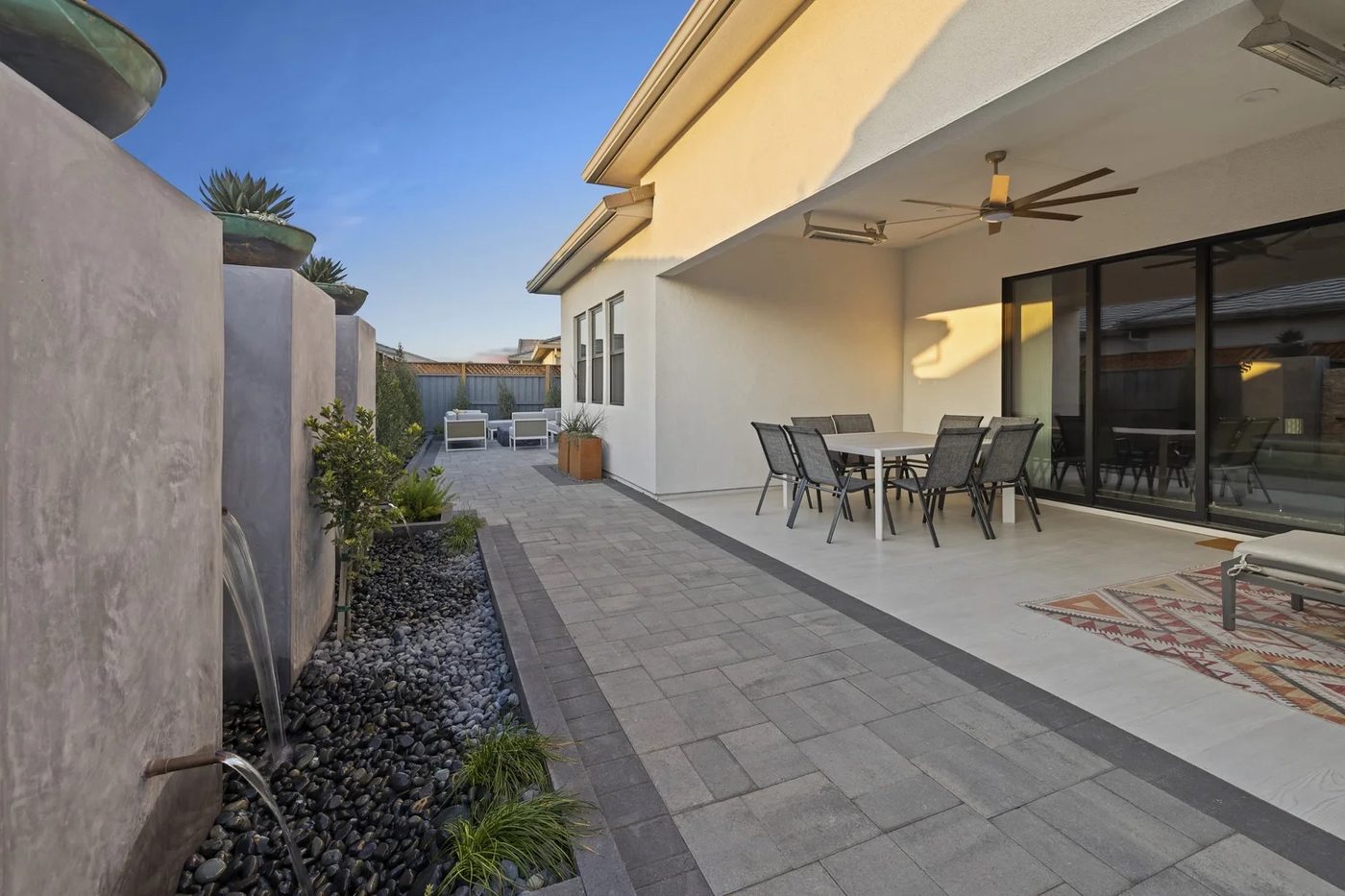
- Shade first. Because the heat comes from direct sun, the coolest turf is turf that sits in shade in the afternoon: on the east side of the house, under a tree, or beside a covered patio or pergola.
- Heat-reflective fibers. The UNLV researchers suggested more reflective colors to lower surface temperatures, and some turf is now made with heat-reflective yarns. Synthetic Grass Warehouse says its TigerCool products averaged 10.5°F cooler, and up to 14°F cooler, in lab tests it reports. That is a maker's lab result, and 14°F off a surface that can pass 160°F still leaves it hot.
- Don't count on infill. Penn State mixed 20% calcined clay into crumb rubber infill to hold water and cool the turf by evaporation. It did not lower the surface temperature.
- Plant where nobody walks. A hot west-facing strip that no one plays on is often better as drought-tolerant planting on drip than as turf.
- Use the hand test. Before kids or dogs go out on a summer afternoon, hold your palm flat on the turf for a few seconds. If it is too hot for your hand, it is too hot for bare feet and paws.
Turf Still Makes Sense in Many Yards
The UNLV researcher was clear that his study is not an argument against artificial turf. It is a caution to compare products before you buy. Turf gives kids and dogs a green, mow-free surface, and it works best as one part of a yard that also has shade, planting and a cooler place to sit.
If you are replacing a lawn in Modesto, read how the City's turf rebate works before you start. See our turf, planting and irrigation work. We can show you the finished yard in 3D before we build, free with the purchase of a 2D design.
Sources
- UNLV News Center: Study Finds Artificial Turf May be Too Hot for Summer Use
- Penn State Center for Sports Surface Research: Temperature and Color
- Penn State (McNitt, Petrunak, Serensits): Temperature Amelioration of Synthetic Turf Surfaces through Irrigation
- UF/IFAS News: Scorching temps from California turf raise questions about artificial turf
- Synthetic Grass Warehouse: TigerCool Technology Overview
Checked November 24, 2026. Rules, programs and prices change; confirm with the agency or maker before you start.